
A Day in the Life of a Language Assistant
A day in the life of a Language Assistant, known as an Auxiliar de Conversación, is like most things in life, where there are seasons of regularity, punctuated by days and weeks that are a little less regular, but nonetheless exciting.
Most Language Assistants, especially in large cities, will find themselves taking the train or subway (known as the metro in Spain) to work, which can take anywhere from 20 minutes to over an hour (don’t worry, that’s a very normal daily commute in Spain!).
Depending on when your train or subway or bus arrives at your school, you might have some time to kill before classes begin at 9:00am. Not sure how to kill 20 or 30+ minutes before the workday begins? Just do what the Spaniards do! Go grab a café con leche at one of the local tapas bars and enjoy a delicious Spanish breakfast for no more than €2 EUR (about $2.50 USD).
Many Language Assistants will have breakfast each morning with the same group of teachers, before walking into school together to be ready to go in their classrooms for when the morning bell rings at 9:00am.
From then on, you’ll most likely have 5 periods throughout the school day that each last roughly 45 – 50 minutes each.
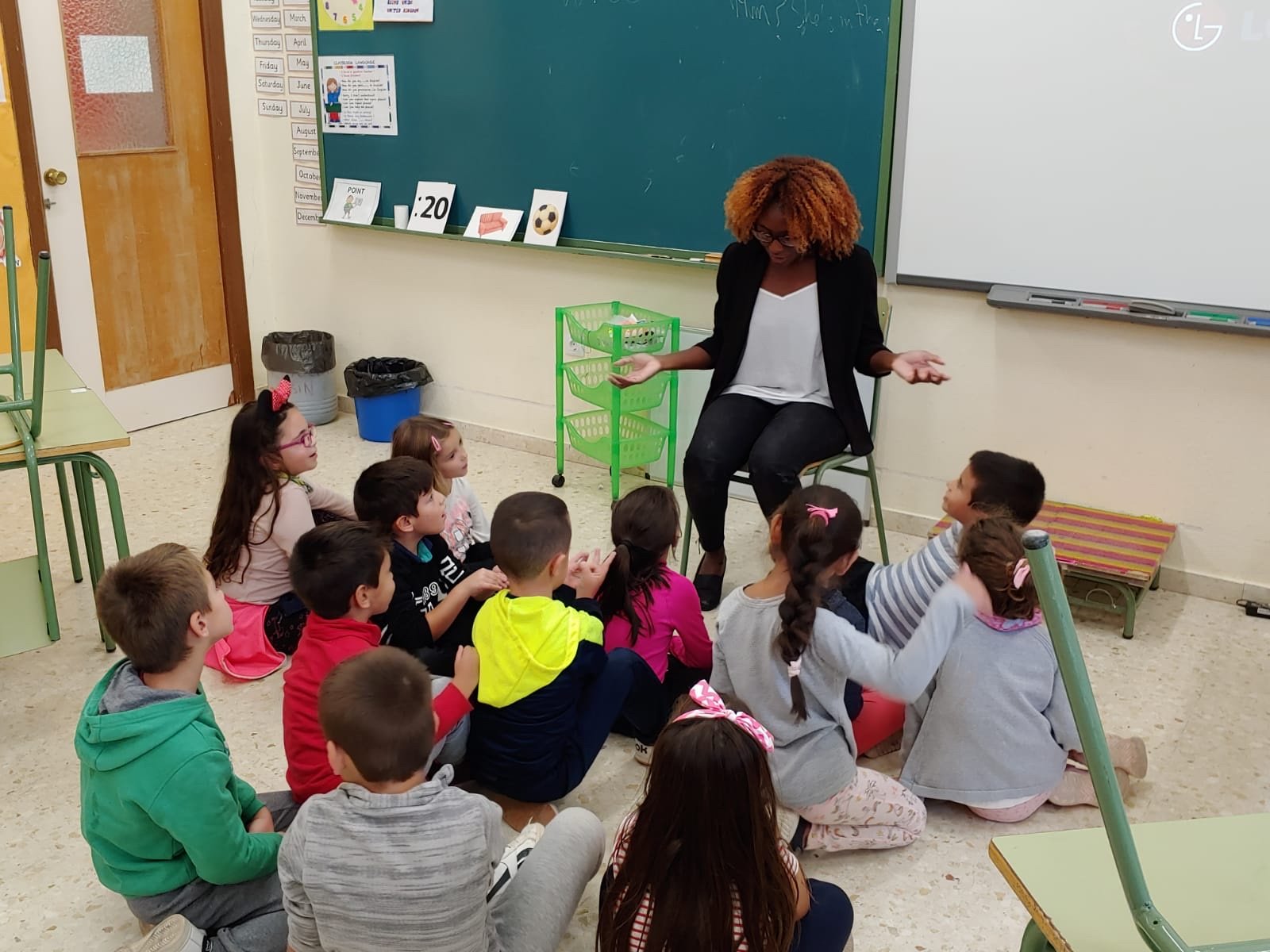
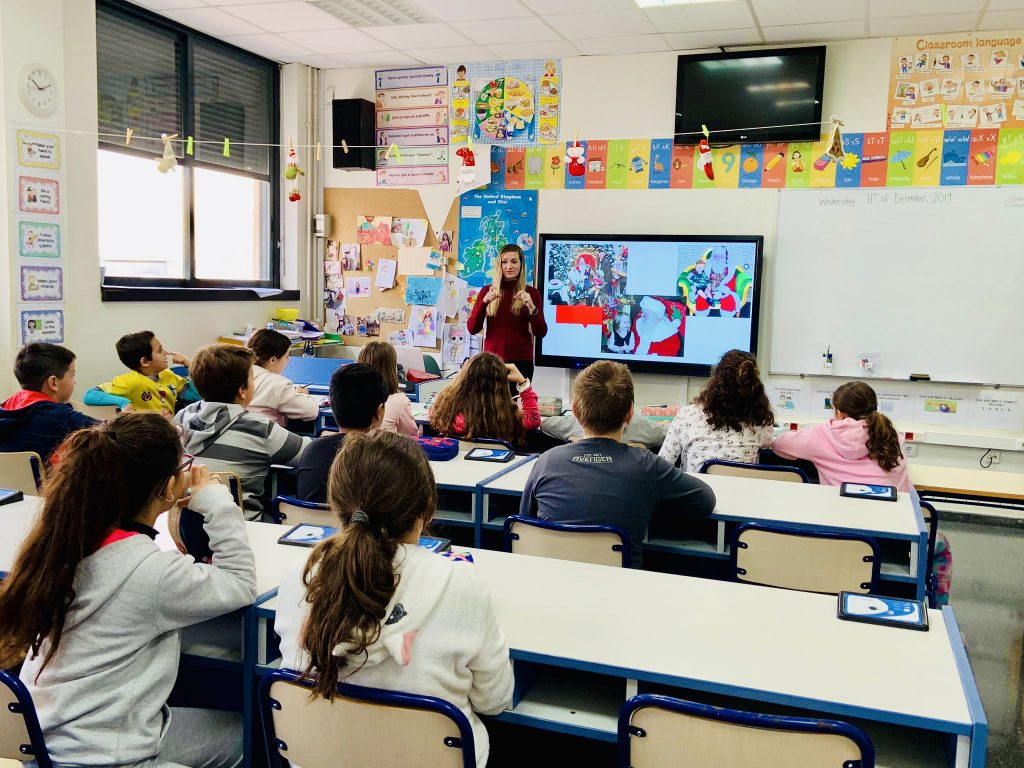
For your first period, you might be leading a 6th grade English class, with around 25 students. But don’t worry! You won’t have to come up with or create the curriculum, the school will already have that ready to go for you before you ever arrive at the school on your first day.
Certain classroom activities might look like giving a cultural presentation on where you come from and your life in your home country, full of photos of your family, your city, your pets – anything at all to let your ever curious students know a little more about you. Or you might be leading a conversational English activity, pairing up all the students in to groups so they can practice introducing themselves to people in English. Another day, you might be leading them in a History workshop, all in English, going over Spanish fascinating history and past (Once again, don’t worry! You’ll have all the materials and workbooks provided by the school!)
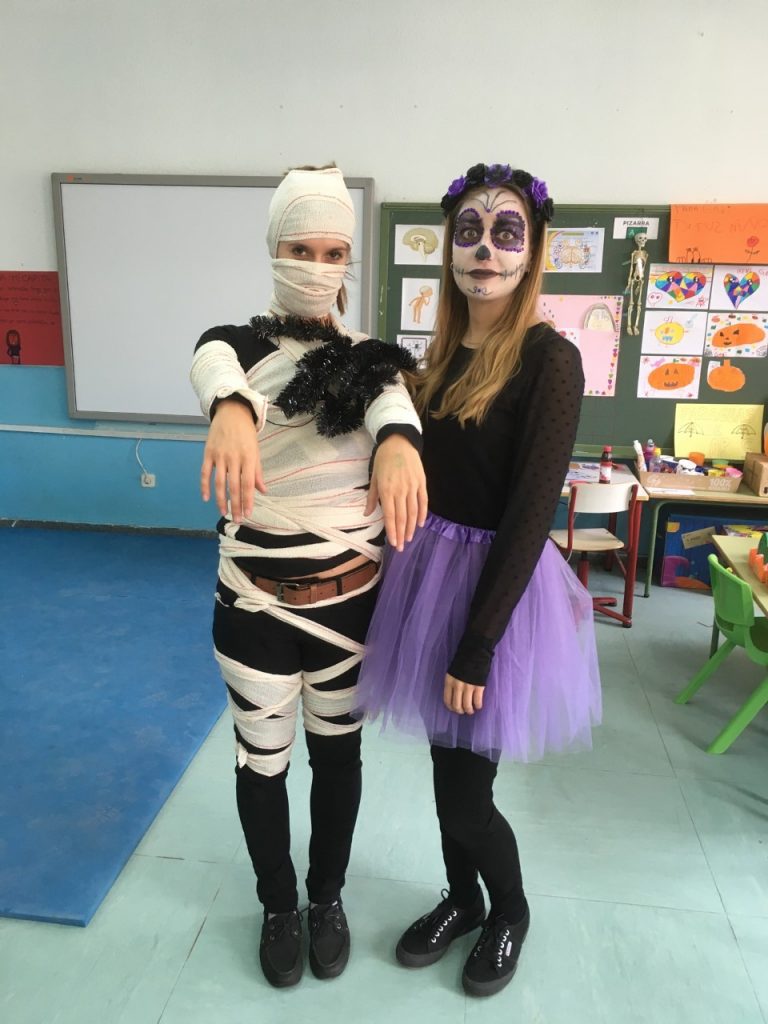
If it’s October and you’re teaching at an Elementary or Middle School, you might be tasked with coming up with a fun Halloween related activity that incorporates fun conversational or vocabulary English elements to it. This might look like spending a few days decorating the school’s library as a haunted house and organizing different stations for different activities, such as a Pin the Tail on the Donkey game that includes English words or grammar that your students can learn that is unique to Fall or Halloween.
At 12.00pm noon each day, while the kids are all at recess, you’ll find yourself in the Teachers Lounge with all the other Spaniards enjoying a very Spanish merienda -midnoon snack break. You’ll practice your Spanish and chat with the other teachers for half an hour, while enjoying coffee, tea, pastry and deserts, or something a little more savory like Spanish tortilla or empanadas.
From 12:30pm to 2:00pm, you’ll be back in the classroom finishing out your last one or two classes for the school day. At exactly 2.00pm, the final bell of the day will ring and just like anywhere else in the world, the school will quickly empty out as the students race home for their late afternoon Spanish lunch with family, while you leave behind them.
But your Spanish school day isn’t over yet! Before hopping on the train to take you home, you’ll most likely grab a Spanish beer, glass of wine, or, depending on the weather, a delicious Spanish cider, known an as cidra, with your other work mates, while chowing down on some Spanish finger-food tapas. There isn’t anything better in the world than enjoying a home cooked local meal in another country with locals from that area.

After a quick half an hour bite to eat (or possibly even longer), you’ll hop back on the train and will arrive home a little after 3:00pm, either ready to take a Spanish siesta or to continue exploring all that Spain has to offer. If you are interested in teaching abroad, contact us today!